

A Survivor Stands Tall as the Supreme Court Reasserts That Power Cannot Dilute Justice
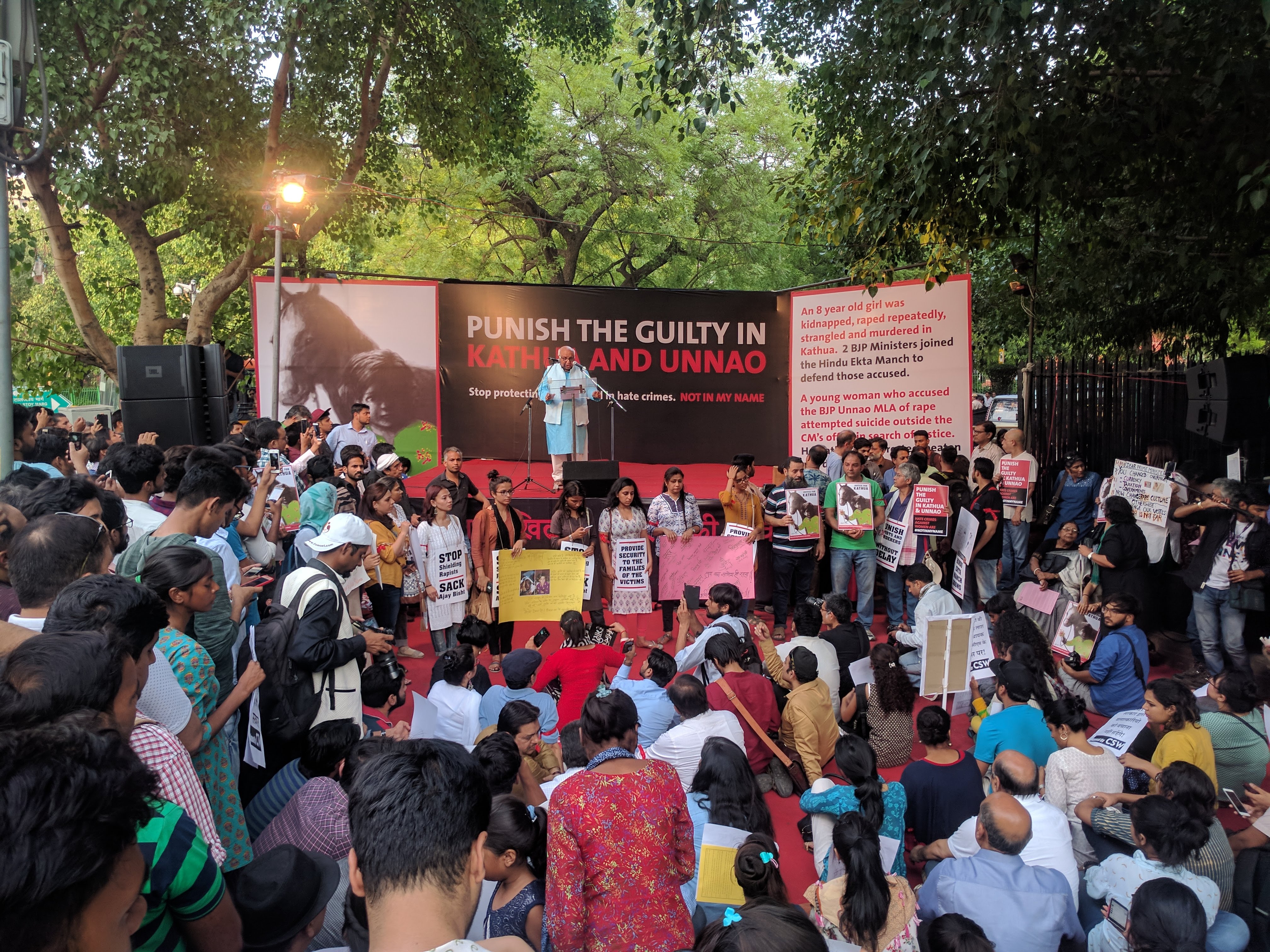

Eight years after her life was shattered, the survivor of the 2017 Unnao rape case once again found herself fighting to protect a hard-won sense of justice.
This time, the battle was not on the streets or outside police stations, but in the highest court of the land.
On Monday, the Supreme Court of India stepped in to stay a Delhi High Court order that had suspended the life sentence of former BJP MLA Kuldeep Singh Sengar.
The intervention came as a sharp reminder that technical interpretations of law cannot be allowed to weaken accountability in crimes involving children and abuse of power.
For the survivor, the court’s decision was deeply personal.
“I will continue to fight until he is hanged,” she said, her voice carrying years of pain, loss and resilience. “This is not just my fight. It is for every woman and every daughter who has suffered what I did.”
A Childhood Stolen, a Life Rebuilt Under Fear
In 2017, she was not yet sixteen. As the Solicitor General reminded the court, she was 15 years, 10 months and 13 days old when the crime took place.
The accused was not an ordinary citizen, but an elected legislator wielding immense influence in her region.
Since then, her life has moved forward in form, but not in freedom. She is now married, a mother of two young children, and the backbone of a family still living under constant anxiety.
“My differently-abled mother looks after my toddlers,” she said. “After the High Court order, my husband lost his job.
Only we know how we are surviving. Our lives have been reduced to a cruel joke.”
Her husband echoed the sentiment with quiet determination. “She is my Lakshmi,” he said. “I lost my job, but that does not matter. Worse things have happened to us. This fight will continue.”
Why the High Court Order Triggered Alarm
The controversy arose from a December 23 order of the Delhi High Court, which suspended Sengar’s life sentence under the Protection of Children from Sexual Offences (POCSO) Act.
The High Court made a prima facie observation that an elected MLA may not fall within the definition of a “public servant” under Section 21 of the Indian Penal Code (IPC), a definition referenced by the POCSO Act.
The reasoning rested on a technical distinction: while the Prevention of Corruption Act explicitly includes MLAs and MPs as public servants, the IPC does not expressly name them.
For the survivor and the investigating agency, this reasoning struck at the very purpose of POCSO.
CBI’s Argument: Law Must Serve Its Purpose
The Central Bureau of Investigation, which prosecuted the case, argued before the Supreme Court that legal definitions cannot be read in isolation.
It stressed that POCSO exists to protect children from individuals in positions of dominance and authority.
An MLA, the CBI argued, commands enormous social and political power over constituents.
Excluding such figures from the category of “public servant” under POCSO would create an absurd situation where a constable or village official faces harsher punishment than a powerful legislator for the same crime.
The Supreme Court appeared persuaded.
A Bench led by Chief Justice Surya Kant noted that such an interpretation would undermine the very logic of “aggravated” sexual assault, which recognises that abuse by those in authority causes deeper harm.
Life Sentence Beyond POCSO
The CBI also pointed out that even without invoking POCSO, Sengar’s conviction under the IPC stood on its own. He was found guilty under provisions that allow for life imprisonment for rape of a minor and abuse of authority.
The trial court had explicitly ordered imprisonment for the remainder of his natural life.
By focusing narrowly on POCSO, the High Court, the agency argued, overlooked the broader legal basis for the life sentence.
Justice Paused, Not Denied
By staying the High Court’s order, the Supreme Court has ensured that Sengar’s sentence remains intact for now. While he continues to serve time in a separate custodial death case, the symbolic importance of the stay is immense.
For the survivor, it is reassurance that her voice still matters.
“I have faith in the courts,” she said. “The Supreme Court has given me justice today, and I believe it will continue to do so.”
The case will now proceed with the Supreme Court examining a crucial question: can power ever be an excuse for leniency in crimes against children?
For a woman who has already lost her childhood, her father, her livelihood and her peace, the answer cannot come soon enough.
#UnnaoRapeCase #JusticeForSurvivor #SupremeCourtOfIndia #POCSOAct #PowerAndAccountability #WomenAgainstViolence #RuleOfLaw


