
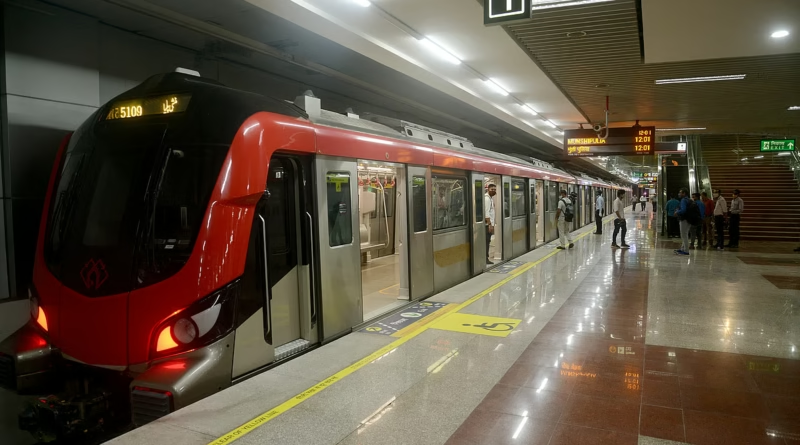
CAG Flags Substandard Rail Hardness in Lucknow Metro Tracks; Audit Raises Durability and Safety Concerns
By Tajdar H. Zaidi
Lucknow: The Comptroller and Auditor General of India (CAG) has raised serious concerns over the structural quality of tracks used in the Lucknow Metro Rail Corporation network, stating that the hardness levels of rails fall short of prescribed Indian Railway standards.
The audit findings were tabled in the Uttar Pradesh Assembly on Friday by state Finance Minister Suresh Khanna.
IIT Kanpur Inspection Reveals Lower-Than-Required Hardness
According to the CAG report, an inspection conducted by the Indian Institute of Technology Kanpur found that the Brinell Hardness Number (BHN) of rails installed in both depot and main line sections did not meet the required strength parameters.
- Depot Tracks: 229 to 242 BHN
- Main Line Tracks: 291 to 308 BHN
These values are significantly below the benchmarks prescribed under Indian Railway standards.
What the Standards Require
As per railway norms:
- Depot rails (HH 880 grade) must have a minimum hardness of 260 BHN
- Main line rails (HH 1080 grade) must fall within a hardness range of 340 to 390 BHN
Hardness is a critical indicator of a rail’s resistance to wear and deformation. Higher hardness typically ensures longer lifespan, reduced abrasion, and better compatibility with train wheels.
Why Hardness Matters
Experts explain that lower hardness levels can accelerate wear and tear on both rails and wheels. When rail hardness and wheel hardness are not properly matched:
- Rail surfaces may degrade faster
- Train wheels can deform prematurely
- Maintenance costs may rise significantly
- Service interruptions may increase
- Long-term passenger safety margins may narrow
IIT Kanpur’s observations suggest that softer rails may reduce the operational lifespan of track infrastructure and rolling stock components. Over time, this mismatch can affect ride stability, alignment precision, and smooth train movement — all crucial elements in a high-frequency urban transit system.
Financial and Safety Implications
Metro rail systems are designed for intensive daily usage with minimal downtime. Substandard rail hardness can lead to:
- Frequent grinding and replacement cycles
- Higher lifecycle costs
- Increased vibration and noise levels
- Potential safety risks if not addressed promptly
While no immediate safety hazard has been officially declared, the audit underscores the need for corrective action to prevent long-term operational and structural complications.
Need for Technical Review and Remedial Measures
The report is likely to prompt a detailed technical review of procurement standards, quality control checks, and third-party testing protocols.
It may also lead to a re-evaluation of vendor compliance and inspection mechanisms during track installation.
Given that metro rail projects are capital-intensive public infrastructure ventures, ensuring adherence to engineering standards is essential not only for safety but also for protecting public investment.
The findings now place the spotlight on accountability and timely rectification to ensure that the Lucknow Metro system continues to operate efficiently and safely for commuters.
#LucknowMetro #CAGReport #RailSafety #InfrastructureAudit #PublicTransport #UrbanMobility #IITKanpur #UttarPradesh #EngineeringStandards #MetroRail


