
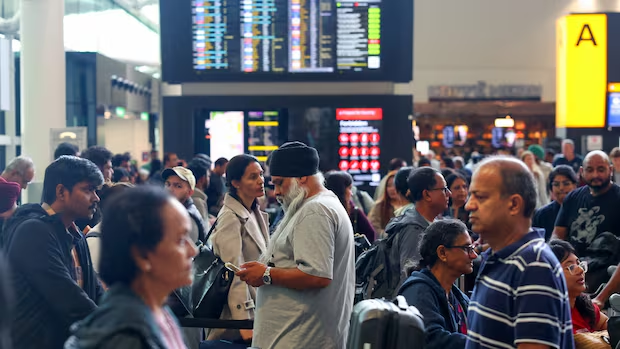
European Airports Disrupted by Cyberattack: A Stark Warning on Technology Misuse
Airport operations across multiple European countries were severely impacted on Saturday due to a cyberattack targeting critical air traffic systems, highlighting both the benefits and vulnerabilities of modern technology.
The attack primarily affected check-in and boarding systems, causing delays and confusion for travellers across the continent.
Officials from Brussels Airport confirmed that the cyberattack forced them to rely entirely on manual check-in and boarding processes, creating a “large impact” on flight schedules.
Similarly, Berlin’s Brandenburg Airport reported disruptions after a service provider for passenger handling systems was targeted, forcing operators to disconnect from affected systems to mitigate damage. London
Heathrow, Europe’s busiest airport, described the incident as a “technical issue” linked to a service provider handling check-in and boarding functions.
The company involved, Collins Aerospace, a US-based aviation and defense technology firm and subsidiary of RTX Corp., develops software that enables passengers to check themselves in, print boarding passes, tag baggage, and dispatch luggage from kiosks.
The firm confirmed that its MUSE software experienced a cyber-related disruption at select airports, though manual processes helped limit immediate damage.
While the impact did not affect all airports—Paris-area hubs like Roissy, Orly, and Le Bourget reported no disruptions—the incident underscores a growing concern: advanced technology, while transformative for operational efficiency, can be exploited with catastrophic potential.
Air travel today depends heavily on interconnected digital systems, making even small-scale cyberattacks capable of triggering massive operational and economic disruptions.
Experts warn that this episode is a wake-up call for governments and aviation authorities worldwide. It demonstrates that technology, despite being a cornerstone of growth and convenience, can be weaponized, posing threats far beyond flight delays.
In a worst-case scenario, attacks on aviation, transport, or infrastructure could escalate into disasters with far-reaching consequences, highlighting the urgent need for cybersecurity vigilance and preparedness.
As air traffic resumes normal operations, European authorities are conducting investigations and implementing stricter cybersecurity protocols to prevent future incidents.
The event serves as a stark reminder that the same technology that facilitates rapid global connectivity can also be misused to disrupt societies and economies on a massive scale.
#CyberAttack #AirportDisruption #AviationSecurity #CollinsAerospace #Heathrow #BrusselsAirport #BerlinAirport #CyberThreats #TechMisuse #DigitalVulnerability #AirTrafficAlert #CyberSecurity #ModernTechRisks #InfrastructureThreat #GlobalAviation


