
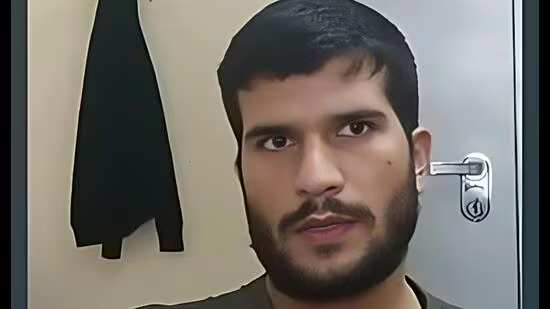
Inside the Last Ten Days: How a Hidden Fugitive Slipped Through Cracks and Drove Delhi to Disaster
In the chilling aftermath of the Red Fort car blast, investigators have pieced together the unsettling final days of Dr Umar Nabi — an assistant professor of medicine at Al-Falah University who lived a double life that no one around him suspected until it was too late.
For ten days, Nabi hid in a rented room in Hidayat Colony, Nuh, shutting himself off from the world while preparing for what would become one of the most disturbing terror incidents in recent years.
The conditions he kept himself in raised more than just suspicion — they portrayed a man whose mind was slipping into dangerous resolve.
He never stepped outside during the day, avoided using the shared toilet, and instead defecated inside the room, storing waste in plastic bags.
He urinated on the walls, never bathed, and stayed in the same clothes for the entire duration. At night, he would quietly slip out to buy food, avoiding eye contact and any form of conversation.
The landlady, Afsana, noticed this strange behaviour early on. The stench seeping from under his door should have been a clear signal that something was deeply wrong.
Had she acted on her fears and informed the police, investigators say the blast in Delhi might never have taken place. But fear, hesitation, and perhaps trust in an acquaintance overpowered her instincts — a hesitation that proved catastrophic.
Nabi had arrived at the house on 31 October, brought in by Afsana’s brother-in-law, Shoaib, who simply told her to “keep a room ready for a guest.”
By the time she realised how unusual the guest was, it was already too late. He rarely parked his i20 car outside, carried two mobile phones, and once even connected Afsana’s spare phone to his hotspot — a clear attempt to mask his digital footprint.
The children in the house later identified him as the same man seen in news reports after the blast.
By 7 November, the situation inside the house had become unbearable. Faeces had begun to leak out of his room onto the floor.
When notified, Shoaib brushed aside the concern — and Nabi quietly slipped out two days later. Only after he left did the family discover the full extent of the filth left behind.
On the night of 9 November, he drove away without uttering a word.
Hours later, CCTV cameras tracked his movements — a masked visit to an ATM in Firozpur Jhirka at 1:01 am, another attempt at 1:24 am, and then his car speeding along the Delhi–Mumbai Expressway.
By the evening of 10 November, he detonated his explosives near the Red Fort, killing himself and injuring dozens.
Fearing consequences, Afsana went into hiding. She surrendered only after her family turned her in.
Her home has since been sealed, and the entire household — from her minor daughter to her brothers — has been questioned by investigative agencies.
Behind the scenes, the pressure on Nabi had been mounting.
Members of his module had been arrested across states, and massive quantities of ammonium nitrate, detonators, and weapons — nearly 3,000 kg worth — were recovered from locations linked to his associates.
Cornered and terrified of being traced, he stopped using his SIM cards, switched to using Afsana’s hotspot, and ultimately decided to destroy himself and whatever evidence he was carrying.
What remains now is a haunting realisation — a terror plot took shape inside an ordinary home, in plain sight, and an attack that might have been prevented went unchecked because warning signs were overlooked.
#RedFortBlast #DrUmarNabi #NuhHideout #TerrorPlot #NIAInvestigation #MissedWarningSigns #SecurityLapse #BreakingNews #IndiaSecurity #CounterTerror


