

Smuggler, Superstar, Myth—and the Daughter Who Refused Silence: Haji Mastan’s Empire Revisited
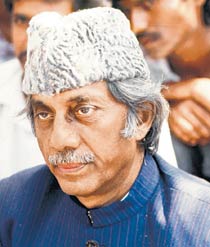


The Gentleman Smuggler, the Silver Screen, and a Daughter’s Unfinished Battle
Mumbai has always had a parallel history—one that runs beneath its skyline of mills, studios, docks, and bungalows.
Few names from that shadow world loom as large as Haji Mastan, a man whose life seemed torn straight from a Bollywood script long before cinema claimed him as inspiration.
To the poor in the city’s bastis, Haji Mastan was a benefactor—soft-spoken, immaculately dressed, and unfailingly courteous.
To customs officials and rival smugglers, he was a master strategist who controlled the arteries of the sea.
To Bollywood, he was both patron and powerbroker, a man whose money, protection, and taste for glamour quietly shaped an era.
From Poverty to the Docks of Power
Born Mastan Haider Mirza in 1926 in a modest village of Tamil Nadu, Mastan arrived in Mumbai as a boy carrying little more than hunger and ambition.
The city gave him hardship first—a cycle-repair shop near Crawford Market, endless hours of toil, and the daily humiliation of earning barely enough to eat.
But Mumbai also gave him a view of wealth: gleaming cars climbing Malabar Hill, foreign cigarettes, imported radios, and theatres glowing late into the night.
Post-Independence India’s rigid import controls turned desire into opportunity. Gold, liquor, electronics—everything the elite wanted but the law forbade—began flowing through back channels.
Mastan learned the rules of the docks, the psychology of officials, and the art of silence.
By the 1960s and 70s, he had become the uncrowned king of maritime smuggling, supplying luxury goods to industrialists, politicians, and, it was long whispered, some of the biggest stars of Hindi cinema.
Bollywood’s Fascination with the Underworld
Haji Mastan did not merely bankroll crime; he curated an image. Always impeccably turned out, he cultivated friendships with leading actors, producers, and directors.
Film stars were frequent visitors to his bungalow, where cinema gossip flowed as freely as imported Scotch.
He financed films, dreamt of producing hits, and even married an actress said to bear a striking resemblance to Madhubala, the woman he was once deeply enamoured of.
This seductive blend of crime, charisma, and culture later found its way onto the screen.
The film Once Upon a Time in Mumbaai immortalised him through the character of Sultan Mirza—a poetic outlaw who ruled Mumbai’s underworld with restraint rather than brute violence.
The portrayal echoed Mastan’s carefully nurtured reputation: a don who never fired a bullet, never stabbed an enemy, yet commanded absolute loyalty.
Politics, Power, and Reinvention
In a dramatic turn, Mastan walked away from crime in the 1980s and entered politics, forming minority-focused parties and contesting elections.
Although he never tasted electoral victory, his campaigns were lavish, marking the early fusion of money, power, and mass politics.
For many, his political phase reinforced the myth of redemption—the smuggler who sought legitimacy before death claimed him in 1994.
When Haji Mastan died of a heart attack, Mumbai mourned him in a way it mourns only legends. Stories of his generosity, discipline, and influence grew larger with time, until fact and folklore became inseparable.
The Other Inheritance
Yet legends often leave behind silences. Today, those silences have been broken by his daughter, Haseen Mastan Mirza.
Haseen has come forward with allegations that cast a stark, painful light on the private cost of such a powerful legacy.
She claims that as a minor, she was forcibly married to a close relative—already married multiple times—and subjected to sustained abuse.
She alleges that her identity was exploited to strip her of property and dignity, leaving her isolated and traumatised.
Speaking publicly after years of struggle, Haseen says she received neither protection nor support—neither as a child nor as an adult.
Her appeal to Prime Minister Narendra Modi and Home Minister Amit Shah is rooted in a broader plea: that crimes against women, especially minors, must be met with uncompromising laws and swift justice.
“If laws were stricter,” she argues, “many women like me would not be forced to live with scars that never fade.”
A Legend Re-examined
Haji Mastan remains frozen in public memory as the “gentleman smuggler,” a man who bent the law but, according to admirers, never crossed certain moral lines. Yet history is rarely that neat.
As Haseen’s battle unfolds, it reminds us that power, glamour, and myth often conceal uncomfortable truths—and that the real stories sometimes emerge long after the spotlight has moved on.
In the end, this is no longer just the story of a smuggler who ruled the seas and dazzled Bollywood.
It is the story of a daughter seeking justice from the shadows of a legend, determined that her voice be heard where silence once prevailed.
#HajiMastan #MumbaiUnderworld #BollywoodAndCrime #OnceUponATimeInMumbaai #HaseenMirza #JusticeForWomen #ChildMarriage #PowerAndSilence #IndianHistory


