
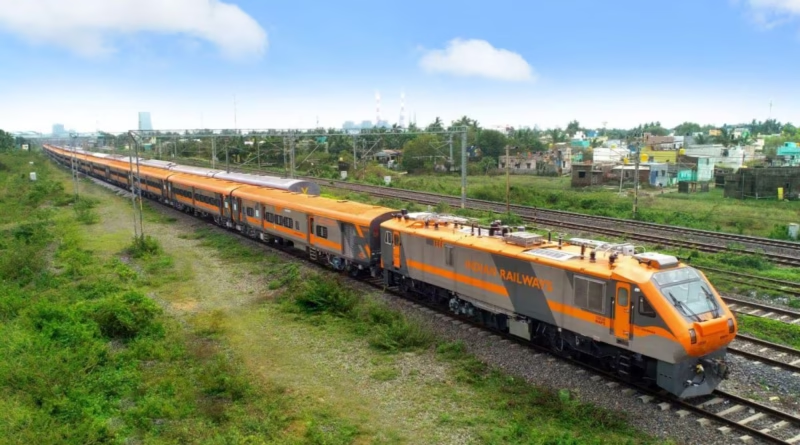
Parliamentary Panel Questions Stagnant Speeds of Long-Distance Trains, Seeks Time-Bound Rail Plan
A parliamentary committee has expressed concern over the continued stagnation in the speeds of long-distance trains in India, questioning why travel times have not improved despite decades of policy targets and infrastructure upgrades.
In its report titled “Punctuality and Travel Time in Train Operations in Indian Railways”, tabled in Parliament on February 4, the Public Accounts Committee (PAC) noted that it was unable to understand why trains covering distances of more than 2,000 kilometres have not become faster over the years, even though high-speed, superfast and express trains operate on the same railway tracks.
The committee pointed out that Indian Railways has repeatedly set ambitious speed targets for both passenger and freight trains over a long period, but has failed to meet them.
According to the report, targets to achieve speeds of 160 kmph for coaching trains and 100 kmph for freight trains were fixed multiple times between 1960 and 2016–17.
Despite frequent revisions of deadlines, these goals remain unfulfilled.
The PAC also reviewed the outcomes of Mission Raftaar, launched by Indian Railways in 2016–17.
The initiative aimed to double the average speed of freight trains from 25 kmph to 50 kmph and increase the average speed of Mail and Express trains from 50 kmph to 75 kmph by the end of 2021–22.
However, the committee observed that actual performance fell short of these objectives, with freight trains averaging only 23.6 kmph and Mail/Express trains reaching just 50.6 kmph.
While acknowledging that the Ministry of Railways has taken several measures to improve train speeds, the PAC highlighted the absence of a coordinated and integrated strategy across all zonal railways as a key obstacle.
The committee recommended that Indian Railways draw up a comprehensive, nationwide plan involving all zonal railways to systematically raise both average and maximum train speeds for passenger and freight services, without compromising safety standards.
It further suggested that express trains should see a gradual increase in average speeds—by about 5 to 10 kmph every few years—which could significantly reduce travel time for long-distance passengers by several hours.
#IndianRailways #ParliamentaryPanel #TrainSpeed #MissionRaftaar #RailInfrastructure #PublicAccountsCommittee #PassengerRail #FreightTrains


