

Sholay: The Final Cut — How a 50-Year-Old Legend Is Rewriting Box-Office History



By Tanveer Zaidi
Half a century after its original release, Sholay, the towering cinematic achievement directed by Ramesh Sippy, has thundered back into Indian cinema halls with Sholay:
The Final Cut. What was expected to be a nostalgic re-release has instead emerged as a full-blown cultural phenomenon—one that proves the legends of Gabbar Singh, Jai, Veeru, Basanti, and Thakur are not relics of the past, but living, breathing memories of Indian cinema.
Meticulously restored in 4K resolution, enhanced with immersive sound, and subtly refined for pacing, the 50th-anniversary edition is not merely revisiting history—it is reclaiming it for a new generation.
Box Office: Nostalgia That Outperforms the Present
Unlike routine re-runs, Sholay: The Final Cut has been positioned as event cinema. Released on December 19, 2025, across select premium multiplexes and iconic single screens, the strategy has paid rich dividends.
- Opening Day (Friday): The film collected an impressive ₹1.8 crore net, an extraordinary figure for a re-release—one that rivals, and in some cases surpasses, the opening numbers of many contemporary mid-budget films.
- Weekend Momentum: Collections surged by 30–40% on Saturday, with occupancy levels touching 80–90% in several cities, particularly in North India and major metros. The estimated two-day weekend total stands between ₹4.5 crore and ₹5.5 crore.
- Curated Screenings: With only 2–3 shows per day, often in 4K Dolby Atmos formats, and packed houses at legendary theatres like Mumbai’s Maratha Mandir, the release has created an aura of exclusivity—turning each screening into a collective celebration.
A Rare Multi-Generational Moment
The real triumph of Sholay lies beyond the numbers. Cinema halls are witnessing an extraordinary demographic convergence:
The Nostalgic Generation — Viewers who first saw Sholay in the 1970s and 80s are returning, often with children and grandchildren, to relive the magic that shaped their cinematic consciousness.
The Curious Youth — Younger audiences, raised on OTT platforms and television reruns, are finally experiencing Sholay the way it was meant to be seen—on the big screen, in collective awe.
The Cinephiles and Students — Film scholars and enthusiasts are revisiting the film as a textbook of mainstream storytelling, studying its composition, rhythm, character arcs, and genre-blending mastery.
What Makes The Final Cut Special?
This is not a cosmetic upgrade. The Final Cut represents years of thoughtful restoration and creative restraint:
- Visual Resurrection: Frame-by-frame restoration from original camera negatives, with scratches removed and colours re-balanced for modern projection systems.
- Audio Reinvention: R.D. Burman’s iconic score and the film’s legendary dialogues have been remixed in Dolby Atmos, making every beat of “Yeh Dosti”, every gunshot, and every echo of Gabbar’s laugh more visceral than ever.
- Refined Pacing: A few sequences in the second half have been delicately tightened—an edit Ramesh Sippy himself had contemplated for decades—ensuring contemporary engagement without disturbing the film’s emotional core.
Dharmendra: The Eternal Veeru
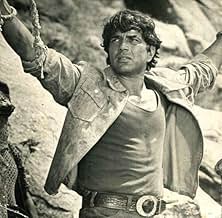
No discussion of Sholay is complete without acknowledging Dharmendra, whose portrayal of Veeru remains one of the most beloved performances in Indian cinema.
Dharmendra’s Veeru is not just a character—it is an emotion. His effortless charm, comedic timing, vulnerability in love, and explosive energy defined an entire era of the Bollywood hero.
Even today, Veeru’s antics on the water tank, his playful banter with Jai, and his unforgettable romance with Basanti draw spontaneous applause. For many viewers, especially younger audiences, Sholay:
The Final Cut serves as a revelation—introducing them to Dharmendra not as a legend spoken of, but as a living force on screen.
At 50 years on, his screen presence remains magnetic, reaffirming why he is often called the original He-Man of Hindi cinema.
Audience and Critical Response
Across social media, videos of packed halls erupting in applause at iconic dialogues, singing along to songs, and whistling in unison have gone viral.
Critics have praised the restoration, noting that it finally allows viewers to appreciate the film’s epic scale—from the sweeping landscapes of Ramgarh to the precision of its action choreography—as originally envisioned in 1975.
The Larger Message to the Film Industry
The success of Sholay: The Final Cut carries profound lessons:
- Timeless Stories Endure: Strong characters and honest storytelling outlive trends and technologies.
- Event Cinema Has a Future: Carefully curated re-releases can coexist with new films and thrive.
- Preservation Is Profitable: Investing in film restoration is not cultural charity—it is smart cinema economics.
A Living Memory, Not a Museum Piece
Sholay: The Final Cut is more than a box-office success. It is a national reminder that cinema, when made with conviction and preserved with respect, never ages. For India, Sholay is not merely a film—it is a shared inheritance.
And as audiences continue to return to theatres, one truth stands tall after 50 years:
Legends don’t fade. They return.
(The WriterTanveer Zaidi is an actor, author, and educationist.)
#Sholay #SholayTheFinalCut #Dharmendra #RameshSippy #IndianCinema #BollywoodClassics #FilmRestoration #EventCinema


