
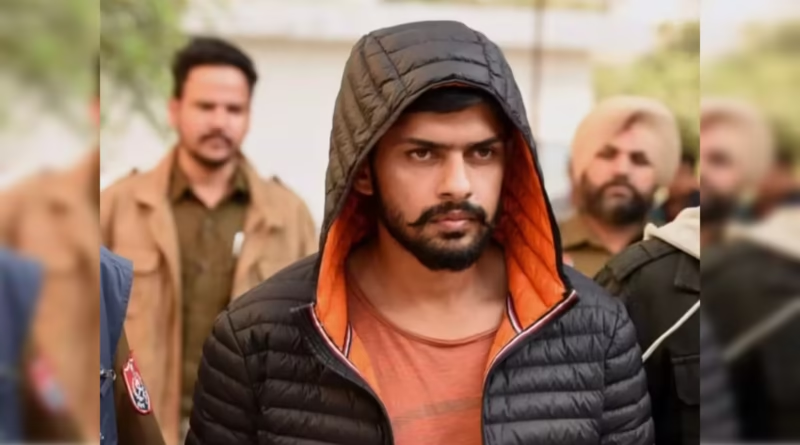
Social Media Glamour and Gang Culture: How Online Hype Drew Young Men Into the Rohit Shetty Firing Case
Investigators probing the shooting outside filmmaker Rohit Shetty’s bungalow have found that most of the seven arrested suspects are barely in their twenties.
Police say they fit a pattern increasingly noticed in recent years — young men from northern Indian states becoming fascinated with organised crime groups after prolonged exposure to their online propaganda.
During preliminary questioning, the accused told officers they were influenced by multiple Facebook and Instagram pages linked to the Shubham Lonkar network, which showcased the gang’s activities in a glorified manner.
The arrests were made in a coordinated operation carried out by Mumbai Police along with the Uttar Pradesh Special Task Force (STF) across Haryana and Uttar Pradesh.
Authorities have identified Shubham Lonkar as the alleged planner behind the firing that took place earlier this month at Shetty’s Juhu residence.
According to police, the group maintains an elaborate digital ecosystem of “fan pages” that upload short videos and photographs portraying members with a stylish, fearless image — sometimes even recorded near court premises.
Back in October 2023, Punjab Police had alerted the Union Home Ministry, state police chiefs, and anti-terror agencies after shutting down more than 6,000 such online accounts promoting criminal networks.
Mumbai Police, which has been tracking the group for nearly two years, said monitoring and reporting such accounts is a continuous process.
Unlike older underworld syndicates that relied on secrecy and coded communication, this gang openly uses social media platforms to project influence.
“Even if we take down certain accounts, new ones appear quickly,” an officer noted.
An STF officer from Uttar Pradesh said the detained men admitted they were first attracted by online videos and later contacted through a person in their village who had links with the gang.
These online pages often feature young men posing with assault rifles, reels celebrating gang members’ appearances in court, and imagery designed to build a rebellious persona.
They are also typically the first to post claims of responsibility after violent incidents, gathering large numbers of likes and shares and sustaining the group’s notoriety.
Police said many youngsters themselves initiate contact through direct messages, asking for a chance to join.
Earlier criminal networks had to actively recruit gunmen and pay substantial sums. Now, investigators say, some youths volunteer willingly — sometimes agreeing to carry out tasks for negligible money simply for recognition.
Officers also found several fan pages displaying references to murder and attempted murder laws in their usernames as a way to flaunt criminal identity and attract attention from senior gang members.
Another attraction reportedly offered — especially to recruits from financially distressed backgrounds — was the promise of eventually being relocated abroad, particularly to Canada.
“Youngsters watch these flashy clips and imagine fame and power. Only after long imprisonment do they understand the consequences,” an officer said.
In a related development, Anuj Thapan — one of the accused in the firing outside actor Salman Khan’s residence — allegedly died by suicide inside the Crime Branch lock-up after his arrest.
#CrimeAndSocialMedia #GangInfluence #YouthRadicalisation #LawEnforcement #OrganisedCrime #IndiaNews #DigitalCrime #PoliceInvestigation


