
Pakistan Returns Kargil Boy’s Body to India, Renewing Calls for Humanitarian Border Coordination Point
In a rare humanitarian gesture across the Line of Control, Pakistani authorities on Wednesday handed over the body of a nine-year-old boy from Kargil to Indian officials at the Teetwal-Keran border in Kashmir.
The incident has once again reignited demands for the establishment of a formal humanitarian coordination point along the Kargil border to facilitate the return of bodies and assist divided families living across the region.
The child, identified as Zulqarnain Ali from Hunderman village in Kargil, had reportedly slipped and fallen into the Suru River on Friday.
The river eventually flows into Baltistan in Pakistan-occupied Kashmir, carrying the boy away across the border.
After days of efforts and coordination involving local leaders and activists, including noted social activist Sajjad Kargili, the body was recovered and formally returned by Pakistani authorities.
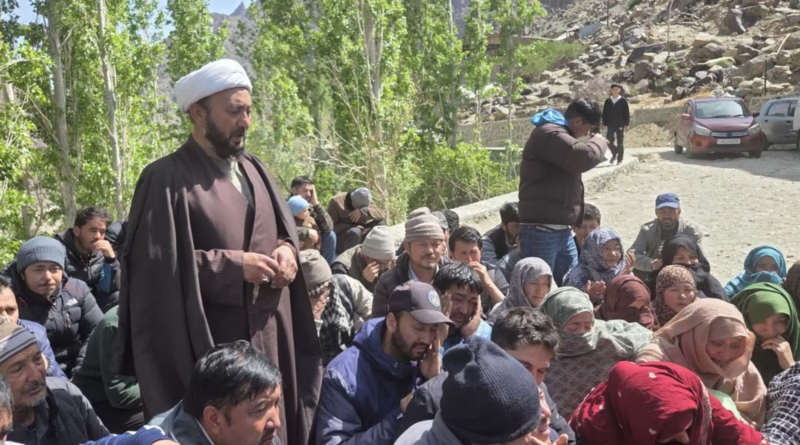
Following the handover, Zulqarnain was laid to rest in Kargil on Wednesday.
Appreciating the gesture, Sajjad Kargili said the episode highlighted the importance of humanity even amid political tensions between the two countries.
“Humanity must always prevail over hostility,” he said, while urging both the Governments of India and Pakistan to create a permanent humanitarian mechanism at the Kargil–Kharmang border.
Kargili pointed out that similar incidents have occurred in the past, but due to the absence of an official coordination system between the two sides, many bodies recovered in the Kharmang region of Baltistan could not be returned to their families and had to be buried there instead.
According to local sources, the body had to be returned through the Keran route because there is currently no designated meeting point for Indian and Pakistani authorities in the Kargil sector.
Speaking about the larger humanitarian impact of the border divide, Kargili said the people of Ladakh and Baltistan have lived with emotional and physical separation for more than seven decades, with thousands of families split across the Line of Control.
“For over seventy years, families have remained divided by borders. It is heartbreaking that not only the living are separated, but even the deceased are often denied a final return to their loved ones,” he said.
He added that establishing a humanitarian coordination point along the Kargil border is no longer merely an administrative requirement but a “moral and humanitarian necessity.”
Kargili also recalled that just last year, several bodies recovered in the Kharmang region had to be buried there because no mechanism existed between the two governments to facilitate their return to families on the Indian side.
The incident has renewed calls from residents and civil society groups in the border region for a humanitarian framework that could help address such sensitive situations with dignity, compassion, and cooperation despite the longstanding political tensions between the neighbouring countries.


