
PM Modi Calls for Return of Work-From-Home, Online Classes Amid West Asia Crisis and Rising Oil Concerns
Prime Minister Narendra Modi on Monday urged Indians to revive several habits adopted during the Covid-19 pandemic, including work-from-home arrangements, online classes, and virtual meetings, as growing instability in West Asia threatens to impact the global economy and India’s financial stability.
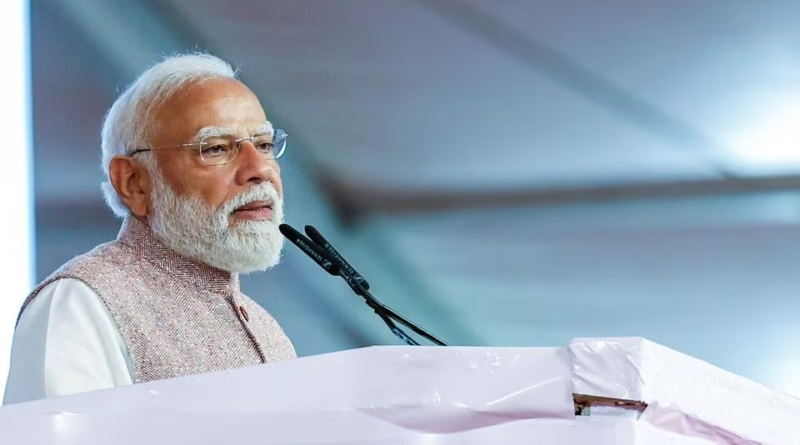
Speaking at a large public gathering in Vadodara after inaugurating the Sardardham hostel, Modi said the escalating conflict in West Asia could emerge as one of the most serious international crises in recent years.
He cautioned that India may not be directly involved in the conflict, but the country could still face major economic repercussions through rising crude oil prices, disruptions in global supply chains, and increasing pressure on foreign exchange reserves.
Referring to the changes people embraced during the coronavirus pandemic, the Prime Minister said India had already demonstrated that remote systems of working and studying were possible and effective.
He suggested that many of those practices should now be brought back temporarily in the larger national interest.
“During the Corona period, we successfully adapted to work-from-home systems, online meetings, and video conferences.
The circumstances today are such that restarting many of these practices would benefit the nation,” Modi said during his address.
He appealed to both government departments and private companies to encourage virtual meetings and remote working wherever feasible in order to cut down unnecessary fuel consumption.
Modi also requested schools, colleges,s and educational institutions to consider online classes for some time so that transportation-related fuel usage could be reduced.
Highlighting India’s heavy dependence on imported crude oil and essential goods, the Prime Minister said the country spends enormous amounts of foreign exchange on imports.
He emphasized that ordinary citizens could play an important role in protecting the economy through simple lifestyle changes and responsible consumption.
Modi urged people to reduce the use of petrol and diesel, make greater use of public transport and metro rail services, adopt carpooling, and increasingly shift towards electric vehicles.
He also advised citizens to avoid non-essential foreign travel and postpone overseas holidays and destination weddings for the time being in order to help conserve foreign currency reserves.
In another appeal aimed at reducing economic pressure, the Prime Minister encouraged people to avoid unnecessary purchases of gold for at least a year and instead support domestically manufactured products under the “Made in India” initiative.
He further asked farmers to reduce excessive dependence on chemical fertilizers and adopt solar-powered irrigation systems wherever possible.
Modi said India had always overcome difficult situations through collective discipline and public cooperation, whether during wars, economic crises, es or natural disasters.
He expressed confidence that citizens would once again act responsibly to safeguard national interests during a period of global uncertainty.
Clarifying that these suggestions were not restrictions or government-imposed controls, the Prime Minister said they were measures of national responsibility intended to shield India from international economic turbulence.
According to him, prudent spending, fuel conservation, and collective discipline could help reduce the country’s vulnerability at a time when geopolitical tensions are affecting economies across the world.
The Vadodara speech came just a day after Modi made a similar appeal in Hyderabad, where he had first spoken about reviving work-from-home culture, virtual conferences, and reduced dependence on imported fuel in response to escalating tensions in West Asia.


