
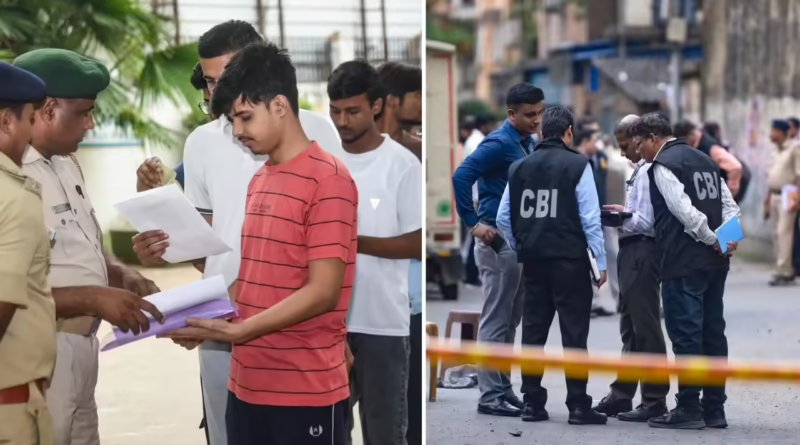
CBI Claims Students Were Taught Leaked NEET Questions in Secret Coaching Sessions
By BK Singh
The recurring allegations of question paper leaks in the National Eligibility cum Entrance Test (NEET) over the past several years have triggered widespread anger, anxiety, and frustration among students and parents across India.
As fresh investigations unfold into the alleged NEET-UG 2026 paper leak case, serious questions are once again being raised about the credibility, transparency, and security of one of the country’s most important entrance examinations.
NEET is the gateway for admission into prestigious medical colleges across India, and every year, lakhs of students spend years preparing rigorously for the highly competitive examination.
However, repeated controversies surrounding paper leaks, cheating rackets, impersonation, and examination irregularities have severely shaken the confidence of aspirants in the system.
The latest developments have intensified public concern after the Central Bureau of Investigation (CBI) reportedly arrested individuals allegedly linked to the examination process.
Reports indicate that investigators are examining the role of officials, middlemen, coaching networks, and persons connected with the preparation and handling of question papers.
There are also claims that authorities are scrutinising the involvement of agencies entrusted with printing and logistics responsibilities related to the examination material.
Many students and parents are now openly questioning how such breaches could repeatedly occur in a national-level examination despite advanced surveillance systems, encrypted processes, and strict protocols claimed to be in place by authorities.
Critics argue that repeated incidents point toward deeper systemic failures rather than isolated lapses.
The controversy has also reignited allegations that firms previously facing scrutiny or blacklisting were again entrusted with sensitive responsibilities related to examination operations.
While these claims are still being debated and verified, they have further fuelled public anger and demands for complete transparency in the conduct of competitive examinations.
Across coaching hubs such as Kota, Prayagraj, Patna, Delhi, and Hyderabad, students are reportedly under immense psychological stress.
Aspirants who spend years preparing for NEET say recurring controversies have left them emotionally exhausted and uncertain about the fairness of the selection process.
Mental health experts have repeatedly warned that prolonged academic pressure combined with fears of corruption and unfairness can have devastating emotional consequences for young students.
Unverified reports circulating on social media have also claimed that several students across the country have allegedly taken extreme steps amid mounting examination pressure and uncertainty.
Though official confirmation regarding such figures remains unavailable, the growing concern over students’ mental health has become impossible to ignore.
Education activists and opposition leaders have demanded stricter accountability mechanisms, faster investigations, and exemplary punishment for those found guilty of manipulating examination systems.
Many have called for a complete overhaul of the examination security framework, including stronger digital encryption, independent monitoring agencies, and biometric verification.
AI-based surveillance systems and stricter auditing of companies handling confidential examination material.
The controversy has also put the spotlight on the National Testing Agency (NTA), which conducts NEET and several other major examinations in India.
Critics argue that repeated irregularities in various competitive exams have dented the credibility of the agency and raised concerns about its administrative preparedness.
Students and parents believe that the issue is no longer merely about one examination leak but about protecting the future of an entire generation.
For lakhs of medical aspirants, NEET is not just an exam — it represents years of sacrifice, financial investment, and dreams of becoming doctors.
Any compromise in its integrity directly impacts careers, public trust, and the future of India’s healthcare system.
As investigations continue, the nation now awaits concrete action rather than assurances.
Students are demanding a system where merit alone determines success, and where honest aspirants are not forced to suffer because of corruption, negligence, or administrative failure.


