
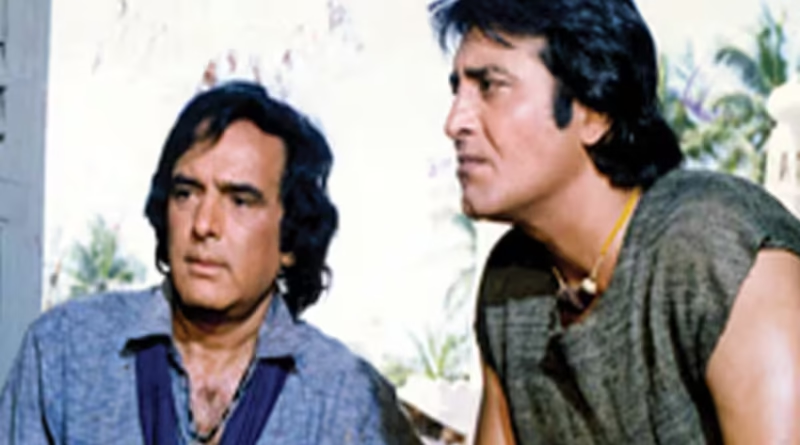
Best Friends, Blockbusters, Same Killer Cancer And Same Date April 27 – A Brotherhood Beyond Breath
By Tanveer Zaidi
The evening of April 27, 2017, was unremarkable for most of Mumbai. Traffic crawled on Carter Road. The Arabian Sea looked grey and tired.
But inside a quiet hospital room in South Mumbai, a chapter of Indian cinema was closing its last page.
Vinod Khanna, aged seventy, took his final breath. And somewhere in the silence that followed, those who remembered whispered a name that was not in the room: Feroz Khan.
 Exactly eight years earlier, on April 21, 2009, the style icon Feroz Khan had left the same world. Same date. Same merciless illness. Squamous cell carcinoma—a cancer that begins in the flat cells lining the mouth, nose, and throat—had found both men.
It did not care that they were matinee idols. It did not care that they had made millions dance to ‘Aap Jaisa Koi’.
It only cared that it had claimed two cinema giants, on the same calendar square, eight years apart.
But to reduce their story to a medical coincidence would be a betrayal of everything they built together.
This is not a story about death. It is a story about a friendship so fierce that even death could not schedule itself on different days.
The story began in the mid-1970s, long before social media manufactured friendships for public consumption. Vinod Khanna was the intense, broodingly handsome man with a voice that could command armies.
Feroz Khan was the flamboyant, whiskey-voiced style icon who wore sunglasses at midnight and made leather jackets look like royal armour.
They were not brothers by blood. They became brothers by choice.
In 1976, they came together for ‘Shankar Shambhu’. The film was a blockbuster.
Not because of its plot—which was unapologetically commercial—but because of what happened between the frames. Vinod Khanna played the righteous angry man.
Feroz Khan played the charming rogue.
Together, they created a template of male friendship that Bollywood had rarely seen: equal, respectful, and electric.
Audiences left theatres talking not about the heroine, but about the way these two men looked at each other—like they would take a bullet without asking why.
Then came 1980. ‘Qurbani’. If ‘Shankar Shambhu’ was a warm handshake, ‘Qurbani’ was a bear hug that cracked ribs. The film was a cultural earthquake. Feroz Khan directed and starred.
Vinod Khanna matched him scene for scene, emotion for emotion. The disco beats of ‘Aap Jaisa Koi’ became an anthem for an entire generation, but the soul of the film was the bond between the two men on screen. Audiences did not just watch them.
They believed them. They believed that if the world ended, these two would still be standing back to back, fighting.
In 1988, something remarkable happened that broke every rule of Bollywood’s fair-weather friendships.
Vinod Khanna had taken a spiritual hiatus, leaving the industry at its absolute peak to follow Osho in the United States.
When he returned after several years, the industry had moved on. Producers hesitated. Directors looked away. The film industry has a famously short memory for those who walk away.
But Feroz Khan did not ask for a screen test. He did not ask for explanations. He did not ask for apologies.
He simply handed Vinod Khanna the lead role in ‘Dayavan’—a film that required a hero with gravity, with pain, with soul.
Feroz Khan chose an ordinary supportive role for himself an example of the true friendship.
That film became a hit. But more importantly, it became a statement carved in stone: loyalty in Bollywood is not extinct. It just lives in very few hearts.
They did not work together frequently. Just those three blockbusters—‘Shankar Shambhu’, ‘Qurbani’, ‘Dayavan’—and a few other successful collaborations.
But every time they shared a frame, the box office roared like a hungry lion. Their success rate together was almost mythical. Yet, they never signed exclusive contracts.
They never needed to. Trust, for them, was not a legal document. It was a handshake that lasted forty years.
Then came the news that no friend wants to receive. Feroz Khan fell ill first. The diagnosis was squamous cell carcinoma—an aggressive cancer that attacks the soft tissues of the mouth and throat. Vinod Khanna visited him often.
Two men who had once ridden horses together on film sets, who had once smoked cigarettes in the rain between shots, now sat in silence in a hospital room. They did not need words.
They understood. The same enemy that was eating Feroz would later come for Vinod. They both knew it, though neither said it aloud.
When Feroz Khan passed away on April 21, 2009, Vinod Khanna did not give a statement to the press. He did not attend any public memorial. He simply disappeared for two days.
Those who knew him said he locked himself in his farmhouse outside Mumbai and did not speak to anyone.
His son, Rahul Khanna, later revealed that his father had cried for the first time in decades. He was not mourning a co-star. He was mourning a part of himself.
Eight years later, Vinod Khanna lay in a hospital bed. The same carcinoma had returned, more vicious than before.
His son Rahul held his hand. The doctors had done what they could—surgeries, chemotherapy, prayers.
But the date was approaching. On April 21, 2017, the calendar repeated itself. Vinod Khanna took his last breath on the exact same date his brother had left.
Whether it was fate, cosmic irony, or a final act of brotherhood—no one knows. But those who believe in such things say Feroz Khan was waiting at the door.
They say he had been waiting for eight years, pacing impatiently, and when Vinod finally arrived, he simply said, “Took you long enough, yaar.”
Today, their films are still watched. ‘Qurbani’ still plays on late-night television. ‘Shankar Shambhu’ still finds new audiences on streaming platforms. ‘Dayavan’ still reminds us what loyalty looks like.
But their real legacy is not on celluloid. It is in the quiet understanding that some friendships are not measured by how often you meet, but by how deeply you stand for each other when the world has turned its back.
Vinod Khanna and Feroz Khan lived like best friends. They gave blockbusters together. They suffered the same killer cancer. And they died on the same date.
April 21 is no longer just a day on the calendar. It is a memorial. A reminder. A question to every friendship you have today: would your friend wait for you at the door?
—–Tanveer Zaidi is an Actor, Author, and educator. He has played lead roles in over a dozen Bollywood movies and numerous television series. He has authored several fictional novels and thousands of articles on various subjects.
वह तारीख जिसने उन्हें अलग नहीं होने दिया: विनोद खन्ना और फिरोज खान का आखिरी, अनलिखित सीन
बेस्ट फ्रेंड्स, ब्लॉकबस्टर्स, एक ही जानलेवा कैंसर और एक ही तारीख 21 अप्रैल – दोस्ती जो सांसों से भी आगे थी
लेखक: तनवीर ज़ैदी
27 अप्रैल, 2017 की शाम मुंबई के लिए सामान्य थी। कार्टर रोड पर ट्रैफिक रेंग रहा था। अरब सागर थका हुआ और धूसर लग रहा था। लेकिन दक्षिण मुंबई के एक शांत अस्पताल के कमरे में भारतीय सिनेमा का एक अध्याय अपने आखिरी पन्ने पर था। सत्तर साल के विनोद खन्ना ने अंतिम सांस ली। और उस सन्नाटे में, जिन लोगों को याद था, उन्होंने एक नाम फुसफुसाया जो उस कमरे में नहीं था: फिरोज खान।
ठीक आठ साल पहले, 21 अप्रैल, 2009 को फिरोज खान इसी दुनिया से विदा हो चुके थे। एक ही तारीख। एक ही बेरहम बीमारी। स्क्वैमस सेल कार्सिनोमा—एक कैंसर जो मुंह, नाक और गले की कोमल परतों में पनपता है—ने दोनों को जकड़ लिया। इससे कोई फर्क नहीं पड़ा कि वे सितारे थे। इससे कोई फर्क नहीं पड़ा कि उन्होंने लाखों लोगों को ‘आप जैसा कोई’ पर नचाया था। इसने सिर्फ इतना सोचा कि दो दिग्गजों को एक ही तारीख पर, आठ साल के अंतराल में, अपनी गिरफ्त में लेना है।
लेकिन उनकी कहानी को महज एक चिकित्सीय संयोग समझ लेना, उस सब कुछ के साथ विश्वासघात होगा जो उन्होंने साथ मिलकर बनाया था। यह मौत की कहानी नहीं है। यह एक ऐसी दोस्ती की कहानी है जो इतनी जबरदस्त थी कि मौत भी अपनी तारीख अलग नहीं रख सकती थी।
कहानी शुरू होती है 1970 के दशक के मध्य में, उस दौर से बहुत पहले जब सोशल मीडिया दोस्तियाँ बनाता था। विनोद खन्ना—तीव्र, गहरी निगाहों वाला, ऐसा खूबसूरत इंसान जिसकी आवाज़ से फौजें भी काँप जातीं। और फिरोज खान—वह शानदार, व्हिस्की जैसी आवाज़ वाला स्टाइल आइकन जो आधी रात को भी धूप का चश्मा पहनता था और लेदर जैकेट को शाही पोशाक बना देता था। वे खून से भाई नहीं थे। वे चुनकर भाई बने थे।
1976 में वे ‘शंकर शंभू’ के लिए साथ आए। यह फिल्म ब्लॉकबस्टर थी। इसकी कहानी साधारण थी—बेशर्मी से कमर्शियल—लेकिन जादू था फ्रेम्स के बीच। विनोद खन्ना ने सीधा-सादा गुस्सैल आदमी खेला। फिरोज खान ने शरारती रोमांटिक हीरो को। साथ मिलकर उन्होंने पुरुष दोस्ती का एक ऐसा साँचा गढ़ा जो बॉलीवुड में कभी देखा नहीं गया था: बराबर, सम्मानजनक, और बिजली जैसा।
फिर आया 1980। ‘कुर्बानी’। अगर ‘शंकर शंभू’ एक गर्मजोशी भरी हैंडशेक थी, तो ‘कुर्बानी’ एक ऐसी गले लगाने वाली दोस्ती थी जिससे पसलियाँ चर जाएँ। यह फिल्म एक सांस्कृतिक भूचाल थी। फिरोज खान ने निर्देशन किया और अभिनय भी। विनोद खन्ना ने उन्हें हर दृश्य में, हर भावना में पूरा साथ दिया। ‘आप जैसा कोई’ का डिस्को बीट पूरी पीढ़ी का गाना बन गया, लेकिन फिल्म की रूह उन दोनों के बीच का वह बंधन था। दर्शक उन्हें सिर्फ नहीं देखते थे—वे उन पर विश्वास करते थे। उन्हें यकीन था कि अगर दुनिया खत्म हो गई, तो ये दोनों अभी भी पीठ से पीठ मिलाए खड़े होंगे।
1988 में कुछ ऐसा हुआ जिसने बॉलीवुड के मौसमी रिश्तों के हर नियम को तोड़ दिया। विनोद खन्ना ने आध्यात्मिक ग्रहण लगा लिया था। अपने करियर के बिल्कुल चरम पर वे ओशो के पास अमेरिका चले गए। कई साल बाद जब वे लौटे, तो इंडस्ट्री आगे बढ़ चुकी थी। निर्माता हिचकिचा रहे थे। निर्देशक नजरें फेर रहे थे। फिल्म इंडस्ट्री की याददाश्त बहुत कम होती है, खासकर उन लोगों के लिए जो चले गए।
लेकिन फिरोज खान ने कोई स्क्रीन टेस्ट नहीं लिया। कोई स्पष्टीकरण नहीं माँगा। कोई माफी नहीं माँगी। उन्होंने बस विनोद खन्ना को ‘दयावान’ की मुख्य भूमिका दे दी—एक ऐसी फिल्म जिसके लिए एक ऐसे हीरो की जरूरत थी जिसमें गहराई हो, दर्द हो, आत्मा हो। और फिरोज खान ने अपने लिए चुना एक साधारण सा सह-किरदार, ये कदम सच्ची दोस्ती को साबित करता था। वह फिल्म हिट रही। लेकिन उससे भी बढ़कर, यह एक ऐसा बयान बन गया जो पत्थर पर लिख दिया गया: बॉलीवुड में वफादारी अभी खत्म नहीं हुई है। वह बस कुछ चुनिंदा दिलों में रहती है।
उन्होंने बहुत सारी फिल्में साथ नहीं कीं। बस वे तीन ब्लॉकबस्टर—‘शंकर शंभू’, ‘कुर्बानी’, ‘दयावान’—और कुछ अन्य सफल फिल्में। लेकिन हर बार जब वे साथ आए, बॉक्स ऑफिस ने शेर की दहाड़ लगाई। उनका साथ कम था, लेकिन गहरा था।
फिर वह खबर आई जो कोई दोस्त नहीं सुनना चाहता। फिरोज खान पहले बीमार पड़े। निदान था: स्क्वैमस सेल कार्सिनोमा—एक आक्रामक कैंसर जो मुंह और गले के कोमल ऊतकों पर हमला करता है। विनोद खन्ना उनसे बार-बार मिलने जाते थे।
वे दोनों, जो कभी फिल्म सेट पर घोड़ों पर साथ सवारी करते थे, जो कभी बारिश में शॉट्स के बीच सिगरेट पीते थे, अब एक अस्पताल के कमरे में चुपचाप बैठे रहते थे। उन्हें शब्दों की जरूरत नहीं थी। वे समझ गए थे। वही दुश्मन जो फिरोज को खा रहा था, वही बाद में विनोद के लिए भी आएगा। यह दोनों जानते थे, हालाँकि किसी ने जुबान से नहीं कहा।
जब फिरोज खान 21 अप्रैल, 2009 को चल बसे, तो विनोद खन्ना ने प्रेस को कोई बयान नहीं दिया। वे किसी सार्वजनिक सभा में नहीं गए। वे बस दो दिनों के लिए गायब हो गए।
जो उन्हें करीब से जानते थे, उन्होंने बताया कि उन्होंने खुद को मुंबई के बाहर अपने फार्महाउस में बंद कर लिया और किसी से बात नहीं की। उनके बेटे राहुल खन्ना ने बाद में बताया कि उनके पिता दशकों में पहली बार रोए थे। वे किसी सह-कलाकार को नहीं रो रहे थे। वे अपने एक हिस्से को रो रहे थे।
आठ साल बाद, विनोद खन्ना अस्पताल के बिस्तर पर लेटे थे। वही कैंसर वापस आया था, पहले से ज्यादा जानलेवा। उनके बेटे राहुल ने उनका हाथ थामा था। डॉक्टरों ने जितना हो सकता था किया—सर्जरी, कीमोथेरेपी, प्रार्थनाएँ। लेकिन वह तारीख करीब आ रही थी। 21 अप्रैल, 2017 को कैलेंडर ने खुद को दोहरा दिया। विनोद खन्ना ने ठीक उसी तारीख पर अंतिम सांस ली जिस दिन उनके भाई ने दुनिया छोड़ी थी।
यह किस्मत थी, ब्रह्मांड का मजाक, या दोस्ती का आखिरी कारनामा—कोई नहीं जानता। लेकिन जो लोग ऐसी बातों पर विश्वास करते हैं, वे कहते हैं कि उस दरवाजे पर फिरोज खान पहले से इंतजार कर रहे थे। वे कहते हैं कि फिरोज आठ साल से इंतजार कर रहे थे, बेसब्री से टहलते हुए, और जब विनोद आखिरकार पहुँचे, तो उन्होंने बस इतना कहा, “यार, तुमने तो काफी देर लगा दी।”
आज भी उनकी फिल्में देखी जाती हैं। ‘कुर्बानी’ देर रात टीवी पर आती है। ‘शंकर शंभू’ ओटीटी प्लेटफॉर्म पर नए दर्शक ढूंढती है। ‘दयावान’ हमें याद दिलाती है कि वफादारी कैसी दिखती है। लेकिन उनकी असली विरासत फिल्म के पर्दे पर नहीं है।
वह उस चुपचाप समझ में है कि कुछ दोस्तियाँ इस बात से नहीं मापी जातीं कि तुम कितनी बार मिलते हो, बल्कि इस बात से मापी जाती हैं कि जब पूरी दुनिया पीठ फेर ले, तो तुम उस वक्त कितनी गहराई से एक-दूसरे के साथ खड़े होते हो।
विनोद खन्ना और फिरोज खान बेस्ट फ्रेंड्स की तरह जिए। उन्होंने साथ मिलकर ब्लॉकबस्टर फिल्में दीं। उन्होंने एक ही जानलेवा कैंसर सहा। और उनकी मौत एक ही तारीख को हुई।
21 अप्रैल अब सिर्फ कैलेंडर की एक तारीख नहीं रह गई है। यह एक यादगार है। एक सवाल है जो आपकी आज की हर दोस्ती से पूछता है: क्या आपका दोस्त आपके लिए उस दरवाजे पर इंतजार करेगा?


