
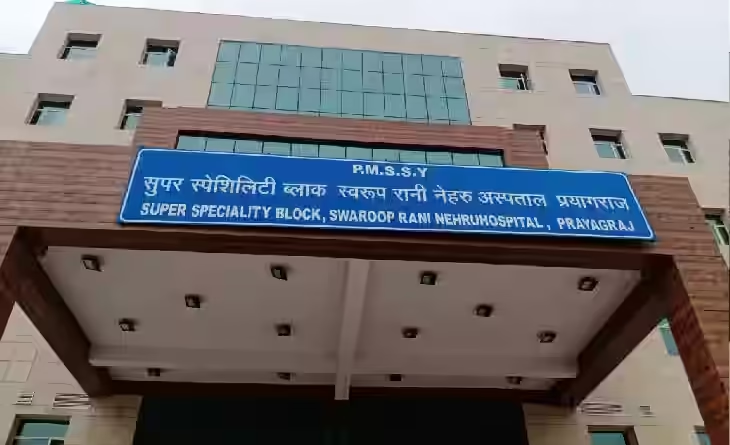
Patients Allege Harassment by Middlemen at Prayagraj’s SRN Hospital; Free Medicines Diverted to Private Stores
Prayagraj: Patients and attendants visiting Swaroop Rani Nehru (SRN) Hospital in Prayagraj have raised serious concerns about the growing influence of middlemen operating within the hospital premises.
Several visitors claim that individuals posing as helpers routinely intercept patients and persuade them not to collect medicines from government-run pharmacies.
Instead, they allegedly direct them to private medical stores by claiming that government-supplied medicines are ineffective or of poor quality.
According to patients and their families, these middlemen are frequently seen around key locations within the hospital, including the Trauma Centre, the Prime Minister Jan Aushadhi Kendra, OPD complexes, and the OPD pharmacy situated near the PMSSY building.
Witnesses allege that the agents closely monitor patients carrying prescriptions and approach them before they can obtain medicines from authorised government counters.
By discouraging the use of free medicines and steering patients toward private pharmacies, they are allegedly helping private businesses profit at the expense of economically vulnerable patients.
Hospital visitors also report that some middlemen attempt to lure patients by promising discounts ranging from 25 to 30 per cent on medicines purchased from selected medical stores.
Health activists and officials associated with the Jan Aushadhi programme warn that such practices not only mislead patients but also undermine public confidence in government healthcare initiatives designed to provide affordable treatment.
Officials have stressed that medicines supplied through government channels meet approved standards and should not be dismissed without medical justification.
One patient narrated his experience, claiming that he was heading toward the gastroenterology department with a prescription for stomach-related treatment when an unidentified individual repeatedly followed him.
The man allegedly advised him not to purchase medicines from the hospital pharmacy, assuring him that he could obtain the same medicines at a discounted rate elsewhere.
The patient later realised that the person was attempting to divert him to a private medical store and said he felt deceived by the encounter.
Another attendant accompanying a patient in the PMSSY building recounted a similar incident.
According to the family member, a stranger approached them and insisted that medicines available at the government pharmacy would provide little relief.
The individual reportedly encouraged them to buy medicines from a nearby private shop instead.
The attendant said the repeated persuasion created confusion and anxiety at a time when the family was already under stress due to the patient’s illness.
Healthcare experts believe such activities expose a deeper challenge within public hospitals, where vulnerable patients often become easy targets for exploitation.
Families arriving for treatment are frequently unfamiliar with hospital procedures and may trust individuals who appear knowledgeable.
As a result, misleading advice can divert them away from free or subsidised healthcare services, increasing their financial burden unnecessarily.
Responding to the allegations, officials associated with the Jan Aushadhi Centre acknowledged that complaints about unauthorised middlemen have surfaced from time to time.
They emphasised that no outsider should interfere with the medicine distribution process and urged patients to obtain medicines only from authorised counters and pharmacies.
Officials further stated that efforts are being made to identify suspicious individuals operating in hospital premises and to prevent them from influencing patients.
Hospital authorities have also taken note of the complaints. Dr Vivek Pandey, Principal of Motilal Nehru Medical College, under which SRN Hospital functions, stated that the entry of unauthorised agents into the hospital campus would not be tolerated.
He said that if any individual is found misleading patients or diverting them to private establishments for personal gain, strict action will be initiated and the matter may be referred to the police.
The issue has sparked wider concern among patient rights groups and social organisations across the country.
Similar complaints have emerged in several government hospitals in states such as Bihar, Madhya Pradesh and Maharashtra, where activists have staged demonstrations demanding stricter monitoring of hospital premises and stronger action against touts and commission-based networks.
Public health campaigners argue that the problem is not limited to a single institution but reflects a broader challenge facing government healthcare systems.
They have called for increased surveillance, dedicated grievance mechanisms and greater awareness among patients to ensure that free public healthcare services reach those who need them most.
For thousands of patients who depend on government hospitals for affordable treatment, the allegations highlight an urgent need for transparency and accountability.
Health experts say eliminating middlemen from hospital campuses is essential to protecting patients from exploitation and preserving trust in public healthcare institutions.
It’s high time that cops in plain clothes are deputed to catch such middlemen on the spot so that legal action can be taken against them.


