
Odisha Restores Original Odia-Based Spellings of 64 Places, Reverses Colonial-Era Name Distortions
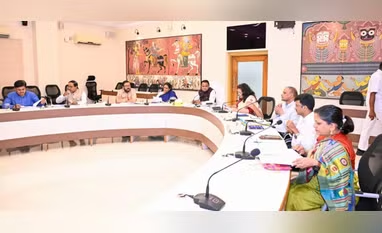
In a significant move aimed at preserving the state’s linguistic and cultural heritage, the Odisha Cabinet on Friday approved revised English spellings for 64 locations spread across 26 districts.
The decision seeks to replace several place names that were altered during the colonial era and restore spellings that more accurately reflect their original Odia pronunciation and phonetic structure.
Announcing the decision, Odisha Chief Secretary Anu Garg said several prominent towns and districts will now officially be known by spellings that are closer to their authentic Odia names.
Under the revised nomenclature, Cuttack will be written as Kataka, Balasore as Baleshwar, Angul as Anugola, Berhampur as Brahmapur, Deogarh as Debagada, Aul as Aali, Keonjhar as Kendujhar and Jeypore as Jayapur.
According to Garg, the changes were necessitated because many of the existing English spellings do not accurately represent the pronunciation of the names in Odia and have gradually weakened the linguistic identity associated with them.
She noted that restoring the original forms is an important step towards strengthening Odia cultural pride and preserving the state’s unique heritage.
The decision carries added political significance, as the concept of “Odia Asmita” or Odia identity emerged as a key theme during the BJP’s campaign in the 2024 Lok Sabha and Odisha Assembly elections.
Notably, the cabinet approval also coincided with the completion of two years of the BJP government in the state.
“This initiative has been undertaken to safeguard and promote Odisha’s linguistic legacy, cultural distinctiveness and historical authenticity,” Garg said while briefing the media after the late-evening cabinet meeting.
The move follows directions issued earlier by Chief Minister Mohan Charan Majhi, who had expressed concern over the continued use of anglicised spellings that diverged from original Odia names.
Subsequently, the state government instructed district collectors to identify locations where official English spellings differed significantly from their authentic local pronunciation.
In response, detailed reports were submitted by district administrations, public representatives and citizens from across Odisha.
These recommendations formed the basis for a comprehensive review process undertaken by the government.
To examine the proposals, the state constituted a high-level committee headed by renowned Odia author Pratibha Ray.
The committee carefully assessed the suggested changes and later placed its recommendations in the public domain for a month to invite feedback from residents and stakeholders.
After considering public responses, the panel finalised its recommendations and submitted them to the government for approval. The Cabinet subsequently endorsed the revised spellings.
Officials said the Odisha government will now formally communicate the changes to the Ministry of Home Affairs through a Gazette notification.
The Centre will be requested to direct agencies such as the Survey of India, Indian Railways, the Department of Posts, the Registrar General and Census Commissioner of India, along with other ministries and departments, to update their official databases and records accordingly.
Senior officials in the Revenue Department explained that many of the altered spellings originated during British rule when colonial administrators transliterated local place names according to English pronunciation patterns rather than their native Odia sounds.
Over time, these modified spellings became entrenched in government documents, maps, railway records, postal systems and official correspondence.
With the Cabinet’s approval now in place, the state government has also announced plans to update public signboards, official signage and administrative displays in the affected locations.
Authorities believe the initiative will help restore historical authenticity while ensuring that place names accurately reflect Odisha’s rich linguistic and cultural traditions for future generations.


